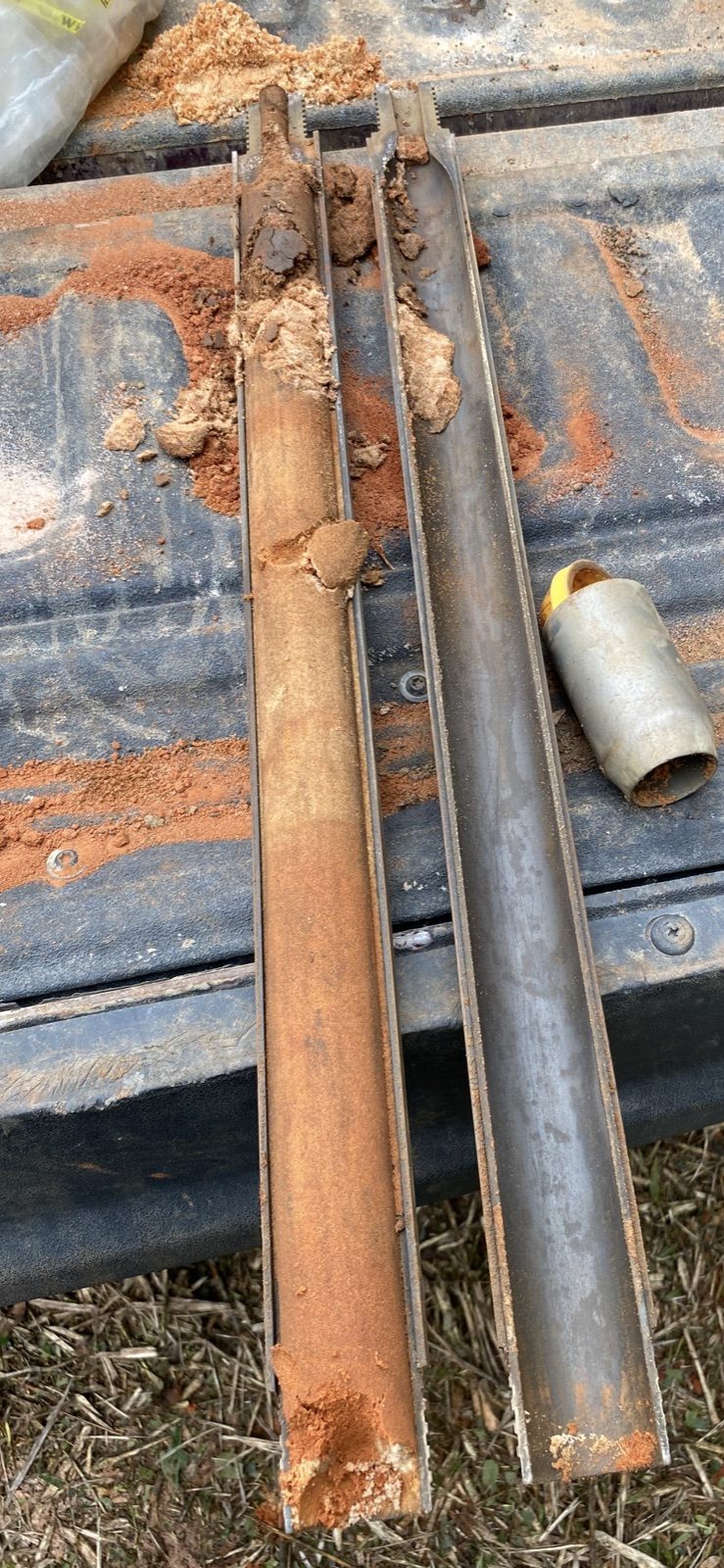
When a geotechnical drilling crew brings a soil sample to the surface, the work doesn’t stop there. That sample can provide valuable information about the conditions beneath a project site and help engineers better understand the materials they may encounter during design and construction.
From collection and labeling to laboratory testing and evaluation, each step plays an important role in turning material from beneath the ground into useful geotechnical information.
It Starts at the Drill Rig
During a geotechnical investigation, soil samples may be collected at predetermined depths throughout a boring. The sampling method used depends on the project requirements and the type of information needed.
One common method is Standard Penetration Testing (SPT), which uses a split-spoon sampler to collect a disturbed soil sample while also providing information about the soil’s resistance to penetration.
For certain soil conditions, Shelby tube sampling may be used to obtain a relatively undisturbed sample. These samples can be especially useful when laboratory testing requires the soil to remain as close as practical to its in-place condition.
Labeling and Documentation
Once a sample reaches the surface, proper identification is essential. Samples are labeled and documented so they can be traced back to the correct boring and depth.
Field personnel also record observations about the materials encountered during drilling. Details such as soil type, changes between layers, sample depths, groundwater observations, and drilling conditions can all contribute to the overall understanding of the subsurface conditions.
Careful documentation helps maintain a clear connection between what was encountered in the field and the information obtained from subsequent testing.
Protecting and Transporting the Samples
Depending on the type of sample and testing required, samples must be packaged and handled appropriately before leaving the project site.
Proper handling helps protect the material from unnecessary disturbance, moisture loss, contamination, or other changes that could affect certain laboratory results. Samples are then transported to the appropriate laboratory or testing facility for further evaluation.
What Happens in the Laboratory?
Once samples arrive at the laboratory, the testing performed will depend on the project’s needs and the characteristics of the materials encountered.
Geotechnical laboratory testing can provide additional information about soil properties. Depending on the project, testing may include moisture content, grain-size analysis, Atterberg limits, soil classification, density, strength, consolidation, or other specialized tests.
Not every sample receives every test. The testing program is selected based on the information needed to evaluate the site and support the project’s geotechnical objectives.
Turning Soil Into Useful Information
The information gathered from drilling, field observations, sampling, and laboratory testing helps develop a clearer picture of what lies beneath a site.
Engineers can use this information when evaluating conditions related to foundations, earthwork, settlement, pavement, excavation, site preparation, and other aspects of design and construction.
A small sample of soil may not look like much when it first comes out of the ground, but when combined with field data and laboratory results, it can provide important insight into subsurface conditions.
Why Proper Sampling Matters
Reliable geotechnical information begins in the field. Proper drilling techniques, accurate sample collection, careful handling, and thorough documentation all contribute to the quality of the information available for evaluation.
At Challenge Testing, Inc., our geotechnical drilling crews work to safely and efficiently obtain the subsurface information needed for projects of all sizes. From the moment the drill rig arrives on site to the collection and handling of samples, our goal is to provide our clients with dependable field services that support their geotechnical investigations.
Have an upcoming project that requires geotechnical drilling or sampling? Contact Challenge Testing, Inc. to learn more about our drilling capabilities and how our team can support your next project.