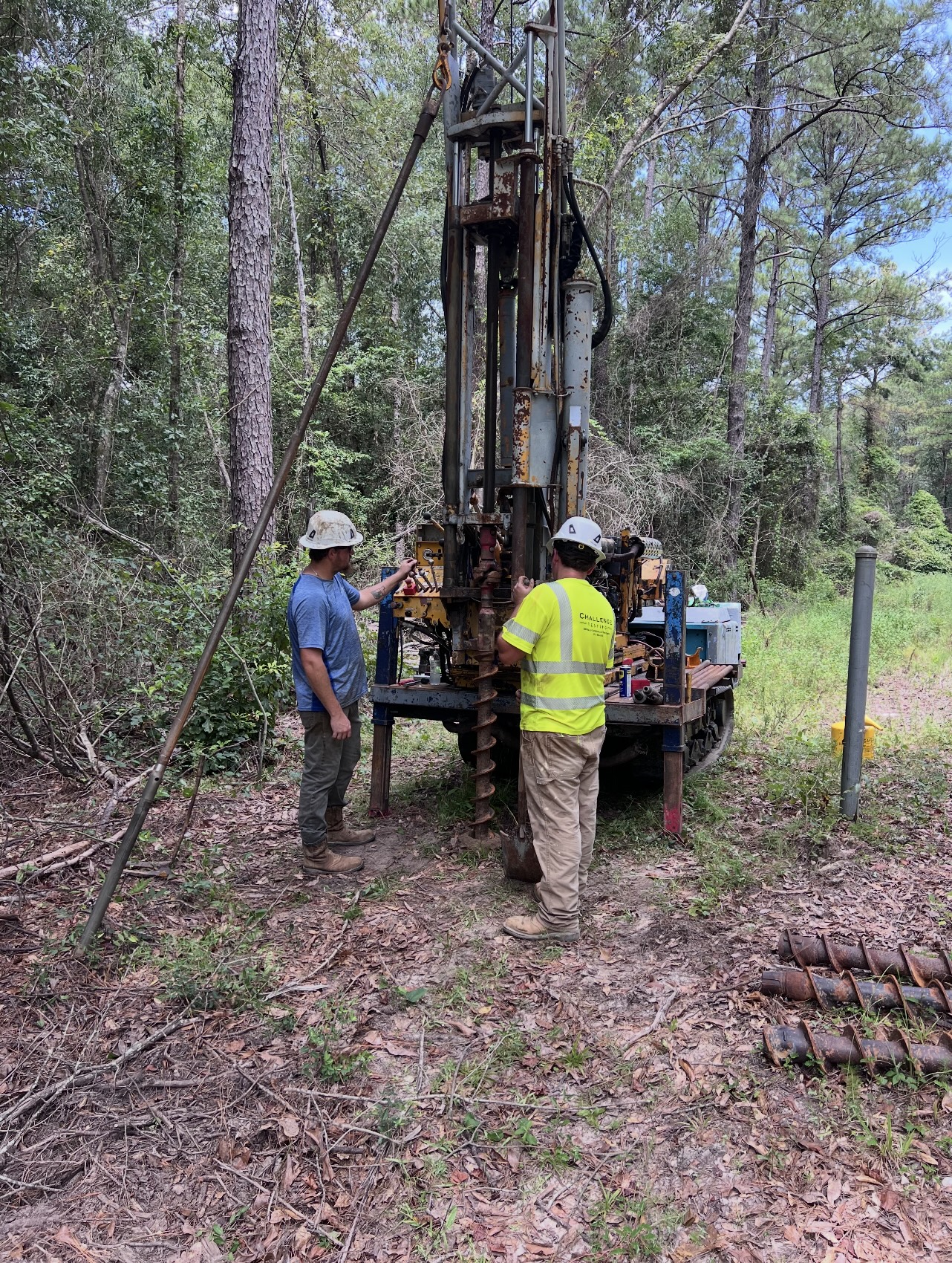
Before construction begins, understanding what lies beneath the surface is an important part of planning a safe and successful project. One of the most common methods used during geotechnical investigations is Standard Penetration Testing (SPT).
What Is SPT Sampling?
Standard Penetration Testing is a field testing method used during geotechnical drilling to evaluate subsurface soil conditions. During the test, a split-spoon sampler is driven into the soil at the bottom of a borehole using a standardized hammer.
The number of hammer blows required to drive the sampler into the soil is recorded as the SPT N-value, commonly referred to as the blow count. This information helps engineers better understand the density and consistency of the soils encountered.
The sampler also collects a soil sample that can be visually classified in the field and, when needed, sent to a laboratory for additional testing.
Why Is SPT Testing Important?
Conditions below the ground can vary significantly, even across a single project site. SPT sampling provides valuable information that engineers can use when evaluating the subsurface conditions of a proposed construction area.
SPT results can help with:
• Evaluating soil density and consistency
• Identifying changes in subsurface soil layers
• Supporting foundation design recommendations
• Evaluating potential settlement concerns
• Providing information for roads, bridges, buildings, and other structures
• Determining when additional sampling or testing may be necessary
By gathering this information early, project teams can make more informed decisions before construction begins.
The Role of Geotechnical Drilling
Accurate SPT results depend on proper drilling, sampling, and documentation in the field. Experienced drilling crews work closely with engineers and geologists to advance soil borings, perform SPT sampling at the required depths, recover representative samples, and document the conditions encountered.
Depending on the project and subsurface conditions, SPT sampling may also be performed alongside other methods such as Shelby tube sampling, rock coring, or groundwater observations to provide a more complete picture of the site.
Building From the Ground Up
Every successful project starts with understanding the ground it will be built on. SPT sampling is a proven and widely used method for collecting valuable subsurface information that helps engineers evaluate site conditions and plan appropriately.
At Challenge Testing, Inc., our geotechnical drilling team has the equipment and experience to support subsurface investigations for a wide range of projects. From soil borings and SPT sampling to rock coring and specialized drilling applications, our team is ready to help provide the information needed to move projects forward safely and efficiently.